


 Video Converter Ultimate
 Bildschirm recorder
 Videoreparatur
 Sicherer Download
Ein umfassender Blick auf die DVD-Auflösung [Erklärt]
Ist dir beim Abspielen deiner DVDs schon einmal aufgefallen, dass die Videoqualität unterschiedlich ist? Zum Beispiel haben andere Discs eine bessere Qualität als die, die du zuvor abgespielt hast. Dieser Unterschied liegt oft an der Auflösung und dem Format der DVD, denn diese sind häufig nicht identisch. In diesem Ratgeber erklären wir, was DVD-Auflösung ist, warum sie wichtig ist und wie du sie ändern kannst. Außerdem gehen wir darauf ein, wie sich die DVD-Qualität von Blu-ray unterscheidet, und geben dir praktische Tipps, wie du die DVD-Auflösung für eine optimale Wiedergabe anpassen kannst. Lies weiter, um mehr zu erfahren.

Teil 1. Was ist DVD-Auflösung
Die Auflösung bezeichnet die Anzahl der Pixel im Videobild, ausgedrückt als Breite x Höhe. Normalerweise lässt sich die Videoauflösung auf Streaming-Plattformen leicht erkennen, da sie die Qualität des Videos beeinflusst. Ähnlich verhält es sich mit DVDs: Unterschiedliche Auflösungen können die Qualität der DVD-Videowiedergabe beeinflussen. Es gibt folgende Arten von DVD-Auflösungen:
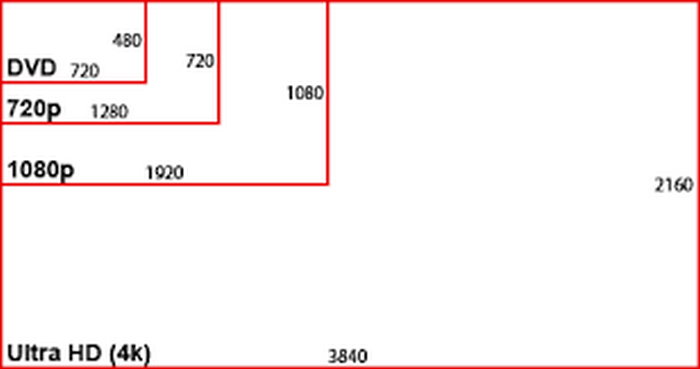
NTSC-DVD-Auflösung: 720 x 480 Pixel, darstellbar entweder im 480i- oder 480p-Format. Diese Auflösung ist Standard Definition (SD), mit NTSC-Fernsehsystemen kompatibel und wird vor allem in Nordamerika und Teilen Asiens verwendet.
PAL-DVD-Auflösung: 720 x 576 Pixel. Diese Auflösung unterstützt 576i- und 576p-Formate und bietet eine etwas höhere Qualität im Vergleich zu NTSC-DVDs. Außerdem wird sie hauptsächlich in Europa, Australien und anderen Regionen verwendet.
Hinweis: Sowohl NTSC- als auch PAL-DVD-Auflösungen sind sowohl im 4:3- als auch im 16:9-Seitenverhältnis verfügbar.
Schließlich beträgt die maximale DVD-Auflösung 480i/p oder 576i/p, was bedeutet, dass DVDs auf die Standardauflösungsqualität beschränkt sind.
Teil 2. DVD-Qualität vs. Blu-ray
Blu-ray ist eine digitale optische Disc, die für die Wiedergabe von High Definition-Formaten entwickelt wurde. Die Qualität der DVD ist nicht mit der der DVD vergleichbar. Um dies zu verstehen, sehen Sie sich bitte die folgende Tabelle an:
Diese Tabelle zeigt, dass es tatsächlich Unterschiede zwischen der Qualität von DVDs und Blu-ray gibt. DVDs sind bei der Auflösung auf SD (Standard Definition) beschränkt, während Blu-ray HD-Video bis zu 4K liefern kann. Zusätzlich bietet Blu-ray eine größere Speicherkapazität als die Kapazität einer DVD. Hinsichtlich der Kompatibilität ist HD jedoch flexibler, da es sowohl auf DVD- als auch auf Blu-ray-Playern wiedergegeben werden kann. Dennoch legt dieser Vergleich nicht fest, welches Format das beste ist. Er soll dir vielmehr einen Eindruck davon vermitteln, was du in Bezug auf die DVD-Auflösung erwarten kannst.
Teil 3. So ändern Sie die DVD-Auflösung
Wenn deine DVD nur eine geringe Auflösung hat, kannst du diese nicht direkt erhöhen, da die Quelle hardwarebedingt begrenzt ist. Du kannst die Qualität jedoch leicht verbessern, indem du die DVD mit einem Tool wie AnyMP4 DVD Ripper ausliest. Diese Software ermöglicht es dir, DVDs (einschließlich 99-Titel-, selbst erstellter, kommerzieller oder kopiergeschützter Discs) in digitale Formate wie MP4, MOV und mehr zu konvertieren und dabei die Auflösung auf bis zu 4K (4096×2160) hochzuskalieren.
Schritt 1. Lade das Programm herunter, installiere es auf deinem Computer und lege deine DVD ein.
Kostenloser DownloadFür Windows 7 oder neuerSicherer Download
Kostenloser DownloadFür macOS 10.7 oder neuerSicherer Download
Schritt 2. Klicke auf “Load DVD”, um deine DVD hinzuzufügen und analysieren zu lassen.
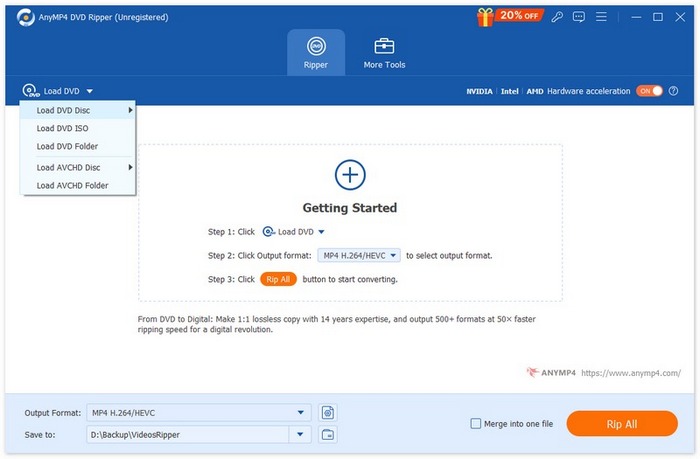
Schritt 3. Wähle im Dropdown-Menü “Output Format” das gewünschte Zielformat aus.
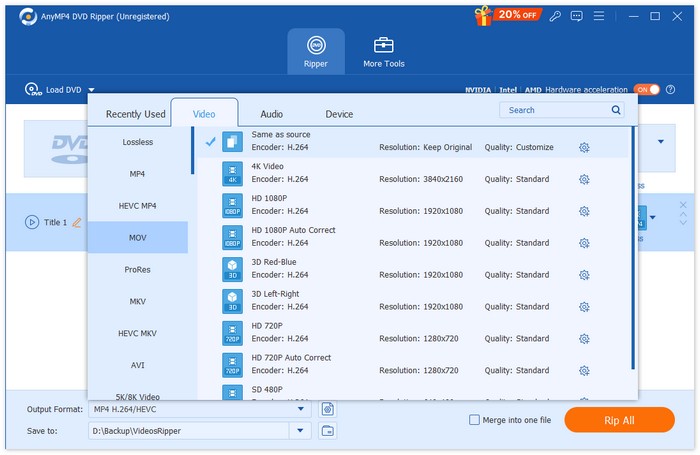
Schritt 4. Klicke auf die Schaltfläche “Custom Profile” neben dem von dir gewählten Format und stelle die Auflösung auf bis zu 4096×2160 ein.
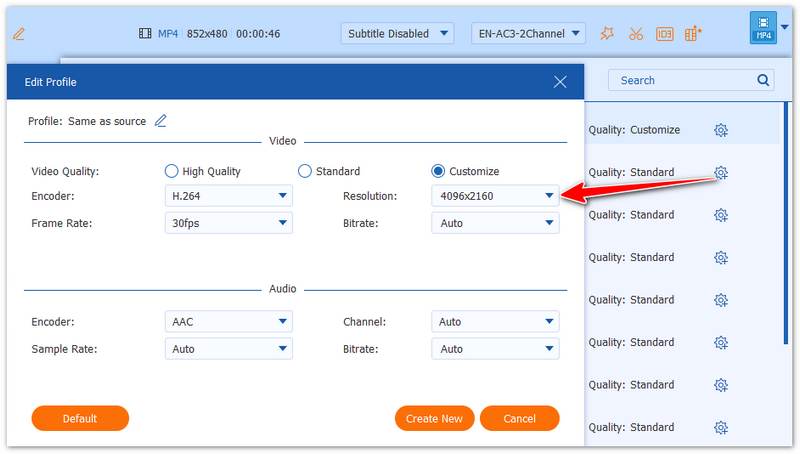
Alles in allem ist AnyMP4 DVD Ripper zuverlässig, vielseitig und unterstützt nahezu alle DVD-Typen. Es eignet sich perfekt, um deine DVD-Videos in hochauflösende digitale Dateien zu konvertieren. Du kannst natürlich auch andere DVD-Ripping-Programme ausprobieren, wenn du möchtest.
Kostenloser DownloadFür Windows 7 oder neuerSicherer Download
Kostenloser DownloadFür macOS 10.7 oder neuerSicherer Download
Teil 4. FAQs zur DVD-Auflösung
Was ist die Standardauflösung einer DVD?
Die Standardauflösung von DVDs variiert je nach Region. Bei NTSC-DVDs beträgt die Auflösung 720 x 480 Pixel. PAL-DVDs hingegen haben eine Auflösung von 720 x 576 Pixel. Beide Formate sind in den Seitenverhältnissen 4:3 und 16:9 verfügbar.
Warum wirkt sich die DVD-Auflösung auf die Videoqualität aus?
Die Auflösung bestimmt, wie viele Pixel zur Bilddarstellung verwendet werden, und wirkt sich direkt auf die Videoqualität aus. Eine höhere Auflösung bedeutet mehr Pixel und in der Regel eine bessere Qualität. DVDs sind auf Standard Definition (SD) beschränkt, was im Vergleich zu hochauflösenden Formaten wie Blu-ray eine geringere Qualität bietet.
Was ist der Unterschied zwischen NTSC- und PAL-DVD-Auflösungen?
NTSC wird hauptsächlich in Nordamerika und Teilen Asiens verwendet und hat eine Auflösung von 720 x 480 Pixeln. PAL hingegen ist in Europa, Australien und anderen Regionen weit verbreitet und hat eine Auflösung von 720 x 576 Pixeln. PAL bietet im Vergleich zu NTSC eine etwas höhere Qualität, beide sind jedoch auf Standard Definition (SD) beschränkt.
Ist die DVD-Auflösung dieselbe wie die Blu-ray-Auflösung?
Nein. Die DVD-Auflösung ist deutlich niedriger als die von Blu-ray-Discs. DVDs sind auf die Standardauflösung (480p/576p) beschränkt, während Blu-ray-Discs High Definition- oder HD-Auflösungen von bis zu 1080p und sogar 4K Ultra HD darstellen können. Blu-ray-Discs bieten im Vergleich zu DVDs eine bessere Videoqualität, mehr Speicherkapazität und besseren Klang.
Fazit
Zusammenfassend lässt sich sagen: Auch wenn die DVD-Auflösung auf Standardauflösungen wie 720 × 480 und 720 × 576 beschränkt ist, kannst du dein Seherlebnis verbessern, indem du DVDs in digitale Formate umwandelst. Mit AnyMP4 DVD Ripper kannst du DVDs ganz einfach auslesen und die Ausgabeauflösung an moderne Bildschirme anpassen. So erhältst du eine praktische Lösung, um alte DVD-Inhalte aufzuwerten.
Kostenloser DownloadFür Windows 7 oder neuerSicherer Download
Kostenloser DownloadFür macOS 10.7 oder neuerSicherer Download
-
 Empfohlene beste Linux-DVD-Ripper – Welcher gefällt Ihnen?
 Wenn Sie einen Linux-DVD-Ripper für Ihren Computer suchen, können Sie sich unsere sechs Optionen ansehen. Die Unterschiede werden ebenfalls erläutert.
-
 Was ist das NTSC-Format und wie rippt man NTSC-DVDs auf unserem Computer?
 Wenn Sie wissen möchten, was das NTSC-Format ist und wie es sich von PAL unterscheidet, lesen Sie diesen Artikel. Wir erklären die Definition von NTSC und wie man NTSC-DVDs rippt.
-
 Was ist ein BUP-Format – Wie können wir BUP-Dateien abspielen und konvertieren
 Wenn Sie wissen möchten, was eine BUP-Datei ist oder mit welchem Player sie geöffnet werden kann, lesen Sie bitte diese Anleitung. Wir bieten Ihnen die ausführlichste Einführung.
